

Complex situations, mergers, significant intangible asset valuation, tax-driven adjustments, or covenant negotiations benefit from specialist input. Training and coaching programs double declining balance depreciation method often include referral networks or more advanced consulting options to escalate when needed. Access to private coaching and community peer support can be particularly valuable during these events.
- It helps management assess the level of equity investment, evaluate the impact of debt, and identify areas where the company can improve its financial position.
- “Bank of America” and “BofA Securities” are the marketing names used by the Global Banking and Global Markets division of Bank of America Corporation.
- But if your company struggles financially, you’ll see the signs early in your balance sheet.
- Document original cost, accumulated depreciation or amortization, and net book value.
Key Takeaways
- It is usually necessary to adjust the preliminary trial balance to ensure that the balance sheet is in compliance with the relevant accounting framework (such as GAAP or IFRS).
- A lower ratio suggests that your company owns more of its assets outright, providing a stronger financial foundation and more room to borrow if needed in the future.
- Prepare schedules for accounts receivable aging, inventory counts, fixed-asset rollforwards, loan amortization tables, and related-party transactions.
- Calculations like Return on Invested Capital (ROIC), Return on Equity (ROE), and Return on Assets (ROA) all require the information provided on the balance sheet to find the rate of return ratios.
- By adding up your liabilities, you can determine the total amount that the business owes to others.
- At this point, it might be worth noting that your success in making an informative balance sheet highly depends on the quality and accuracy of the data you’re putting in.
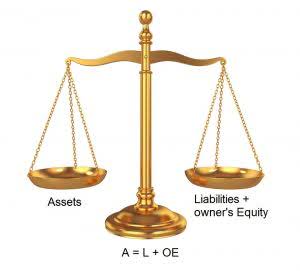
Regularly reviewing your balance sheet can spot potential financial vulnerabilities before they become critical problems. Unusual asset changes, increasing liabilities, or declining equity can be early warning signs requiring immediate attention. This mathematical precision isn’t just a suggestion—it’s the core principle that ensures the integrity of financial reporting. Advisors who incorporate forecasting and cash conversion analysis into balance sheet reviews can turn potential pitfalls into improvement plans. Structured training https://www.bookstime.com/ and community support, like that offered through platforms dedicated to cash flow advisory, help advisors stay sharp and deliver measurable results. Distinguishing between contributed capital and earned capital is essential for valuation and tax discussions.
Step 4: Calculate Shareholder Equity

Once you’ve set up the structure of your balance sheet, you’re ready to move on to the next step and start entering your assets. Now that you’ve set up your Google Sheets and have a blank spreadsheet in front creating a balance sheet of you, it’s time to move on to the next step and begin structuring your balance sheet. A balance sheet is a snapshot of how financially healthy your business is.
Reduce human errors with built-in formulas
Simply put, a consolidated balance sheet merges the assets, liabilities, and equity of a parent company and its subsidiaries into one financial statement. This approach provides a holistic view of your company’s financial health, e. It eliminates intercompany transactions to avoid double counting and ensure accuracy. For creditors, the balance sheet helps evaluate the company’s creditworthiness and money lending risks. Creditors analyze the company’s assets to determine the collateral available for securing loans and assess its ability to meet debt obligations.

Step 7: Review and finalize your Balance Sheet
- Add up total assets, liabilities, and equity with calculated formulas in Excel.
- Our tool allows you to create a fully balanced balance sheet in just a few easy steps.
- Creating a balance sheet in Excel doesn’t have to be a complicated accounting exercise or require an expensive template.
- This involves calculating the total value of all assets listed in step two.
Working capital (current assets minus current liabilities) is a key liquidity measure. Advisors can use working capital to gauge short-term financial health and design actionable interventions. Programs such as Pathfinder train advisors on client conversations and the sales process to deliver these insights as a recurring advisory service. Re-write the resulting balance sheet into the format required for presentation. For example, it may be in comparative format, where the financial position of the business as of multiple dates are listed side-by-side in the report. Or, it may be in a horizontal format, where asset line items are listed on the left, while liability and equity line items are listed on the right.
Resources to help you begin preparing balance sheets
Without context, a comparative point, knowledge of its previous cash balance, and an understanding of industry operating demands, knowing how much cash on hand a company has yields limited value. Although the balance sheet is an invaluable piece of information for investors and analysts, there are some drawbacks. Many financial ratios draw on data included in both the balance sheet, income statement, and statement of cash flows to paint a fuller picture of what’s going on with a company’s business. A balance sheet is a financial statement that provides a snapshot of a company’s assets, liabilities, and shareholder equity at a specific point in time. By putting these steps into practice, it will help you avoid accounting errors, identify new cash flow opportunities and promote financial success within your company.

Understanding the balance sheet is essential for investors, creditors, and company management as it helps assess liquidity, solvency, and overall financial stability. A balance sheet is an accounting report that provides a summary of a company’s financial health for a specified period. Also known as a statement of financial position, the summary reports the company’s assets, liabilities, and equity in one page. The balance sheet is one of the three primary financial statements, along with the income statement and the cash flow statement. Examples of liabilities include loans, accounts payable, and taxes owed. Including all liabilities in your balance sheet is important, as they represent the obligations the business needs to meet.
Small Business Trends

You can easily update and modify the balance sheet as needed in Google Sheets, ensuring that you always have an up-to-date financial snapshot. “Bank of America” and “BofA Securities” are the marketing names used by the Global Banking and Global Markets division of Bank of America Corporation. BofA Securities, Inc. is a registered futures commission merchant with the CFTC and a member of the NFA.